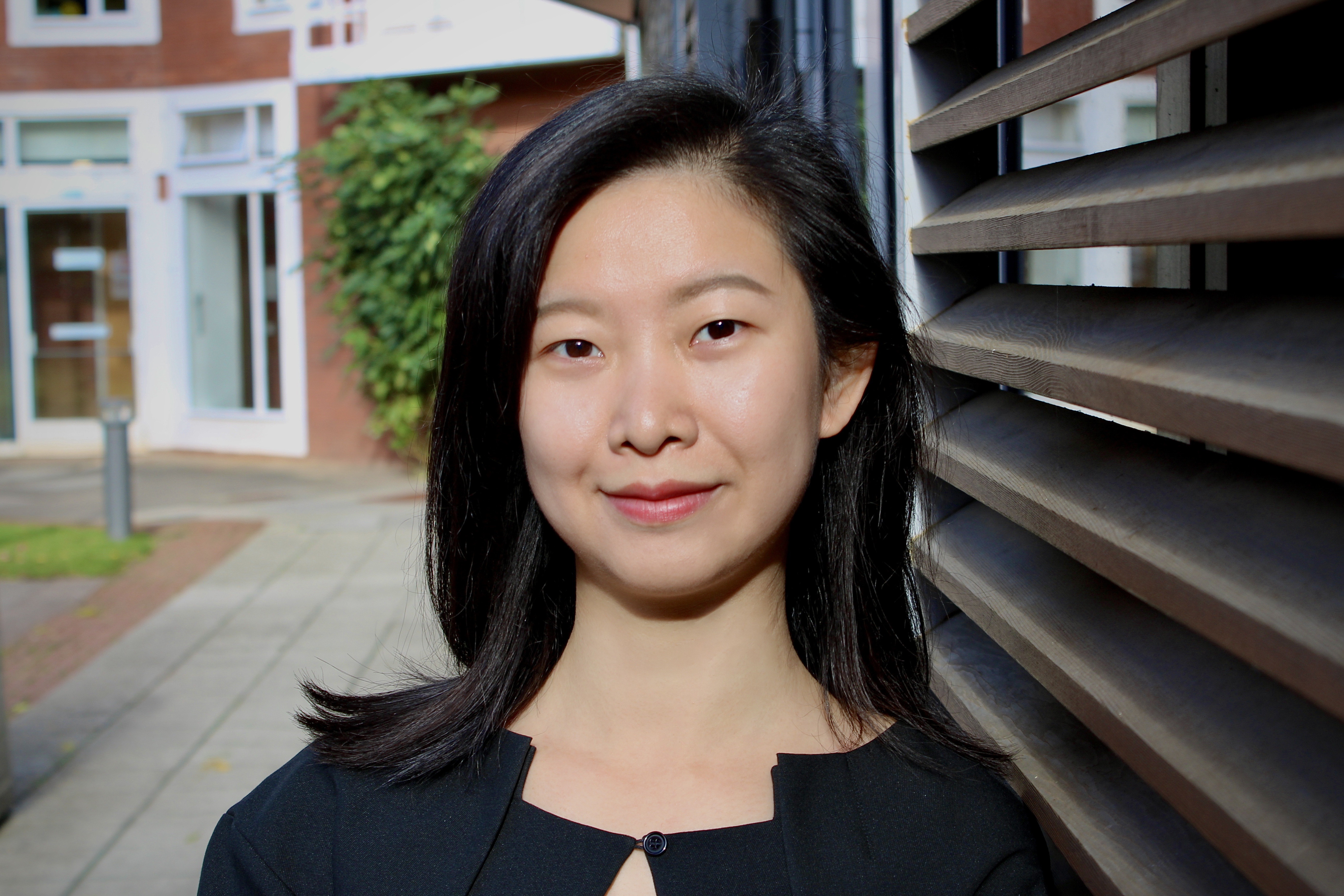
I am a postdoctoral research fellow in the Department of Economics at the University of Warwick.
I completed my PhD at the University of Amsterdam.
I am interested in experimental, behavioral, and empirical microeconomics. My research uses experimental and empirical methods to study challenges individuals face in professional and educational settings.
You can reach me at: Yang.Zhong.1@warwick.ac.uk
Distractions are pervasive in today’s workplaces, from noisy open-plan offices to digital interruptions. Using an incentivized laboratory experiment, I study the effects of distractions on performance and mental well-being, elicit willingness to pay to avoid distractions, and validate questionnaire items on resilience in working under distractions. I then incorporate these validated items in a representative Dutch survey panel. I obtain four main results. First, despite having little impact on performance in the lab, distractions are detrimental to individuals' self-reported mental well-being while working. Second, many individuals are willing to pay to eliminate distractions, and this willingness to pay is negatively correlated with the change in mental well-being. Third, individual heterogeneity in the impact of distractions on mental well-being can be captured by questionnaire items. Fourth, resilience to distractions strongly predicts income and job satisfaction in the representative survey data, even conditional on education, sector, and other personality traits.
(with Silvia Dominguez-Martinez)
We link time pressure preferences to academic outcomes in a setting where assessments rely heavily on timed examinations. We match a large survey of first-year undergraduates to administrative records on grades, credits, and progression. Since students cannot avoid timed examinations where higher productivity should translate directly into better performance, we study how time pressure enjoyment relates to academic performance conditional on perceived productivity. Students who report greater enjoyment of time pressure achieve lower course grades, obtain fewer course credits, and are also less likely to receive a positive study advice to progress to the second year. We examine study hours as a potential mechanism and do not find evidence that higher enjoyment is associated with fewer hours. Negative association between time pressure enjoyment and the non-timed component of a specific course points instead to inefficient pacing or time allocation as a plausible mechanism. We also document lower enjoyment and lower perceived productivity under pressure reported by female students. Our analysis extends the study of time pressure preferences from the laboratory to an educational setting, demonstrating their relevance for real academic performance.
Management Science, 71(3): 1909-1924. (with Thomas Buser and Roel van Veldhuizen)
Many professional and educational settings require individuals to be willing and able to perform under time pressure. We use a lab experiment to elicit preferences for working under time pressure in an incentivized way by eliciting the minimum additional payment participants require to complete a cognitive task under various levels of time pressure versus completing it without pressure. We make three main contributions. First, we document that participants are averse to working under time pressure on aggregate. Second, we show that there is substantial heterogeneity in the degree of time pressure aversion across individuals and that these individual preferences can be partially captured by simple survey questions. Third, we elicit these questions in a survey of bachelor students and show that time pressure preferences correlate with future career plans. Our results indicate that individual differences in time pressure aversion could be an influential factor in determining labor market outcomes.